- Role
- Founder · product, design and engineering
- Platform
- Web, iPhone
- Status
- Launched
- Stack
- Next.js, TypeScript, Expo and React Native, Prisma, Neon Postgres, Tailwind CSS, AWS S3, Lambda and MediaConvert, Stripe
Overview
B150 is a professional network and marketplace for people building with generative AI: developers, filmmakers, designers, game makers, marketers and artists. It runs on the web and as an iPhone app, and brings together a community feed, profiles, a ranked marketplace of AI tools, jobs, events and an online hackathon, the Vibeathon.
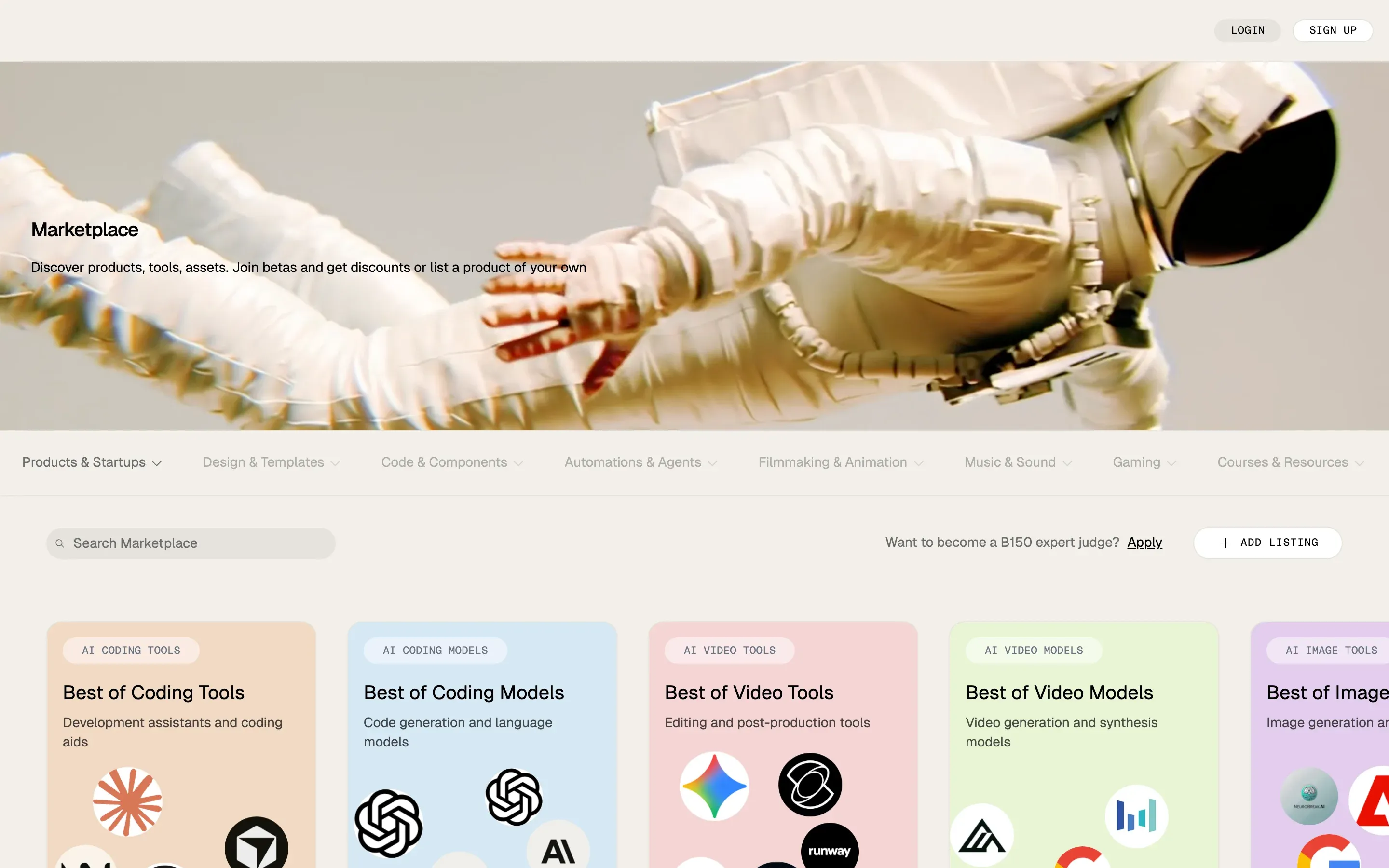
1 / 12The marketplace, where builders find and list AI tools.
Why I built it
Everywhere I looked, people were shipping remarkable things with AI and had nowhere made for them. LinkedIn was performative. Reddit was faceless. The research said the same thing: the communities builders had were fragmented, and each tool reached a different slice of them. LinkedIn plus X plus Product Hunt still added up to frustration. I wanted one place where builders talk to builders, and where your profile shows what you’ve made, not only your title.
My role
I built B150 as a solo founder: the research, the brand, the product, the web app, the iPhone app and the community programme around it. I vibe-coded the first platform in under three months, with no team and no funding: a coding assistant and $260 in credits. Since then the repository has grown to 1,621 commits, 351 of them co-authored with Claude.
What it does
- A community feed for posts, launches and discussion, with rich text, images, video, comments and votes, sorted by newest, popular, trending or the people you follow.
- Profiles that show projects, tools, skills and work history.
- Connections that start with a personal message, sorted into circles.
- A marketplace of AI tools, browsable by category and topic, ranked into tiers from S to D, with the evidence behind each rank.
- Jobs, imported weekly from across the web and posted by members.
- Events: AI events from Luma across 22 cities, shown in your own time zone.
- Direct messages and group chat on web and mobile.
- A Vibecoding Starter Kit that turns a project idea into a PRD, a recommended stack and the prompts to start building.
- The Vibeathon, an online hackathon for builders and creators.
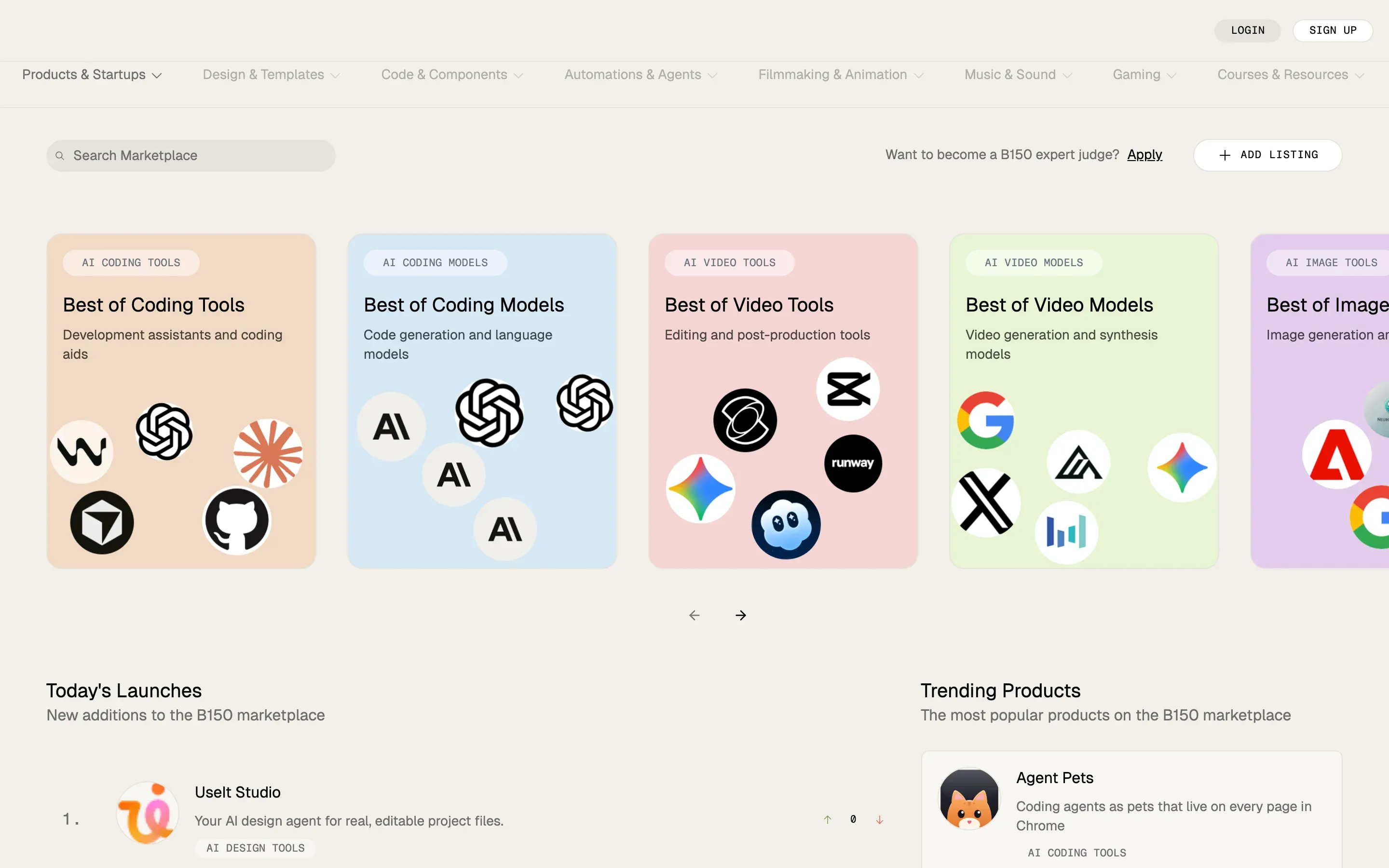
2 / 12Best-of collections, today's launches and what's trending. 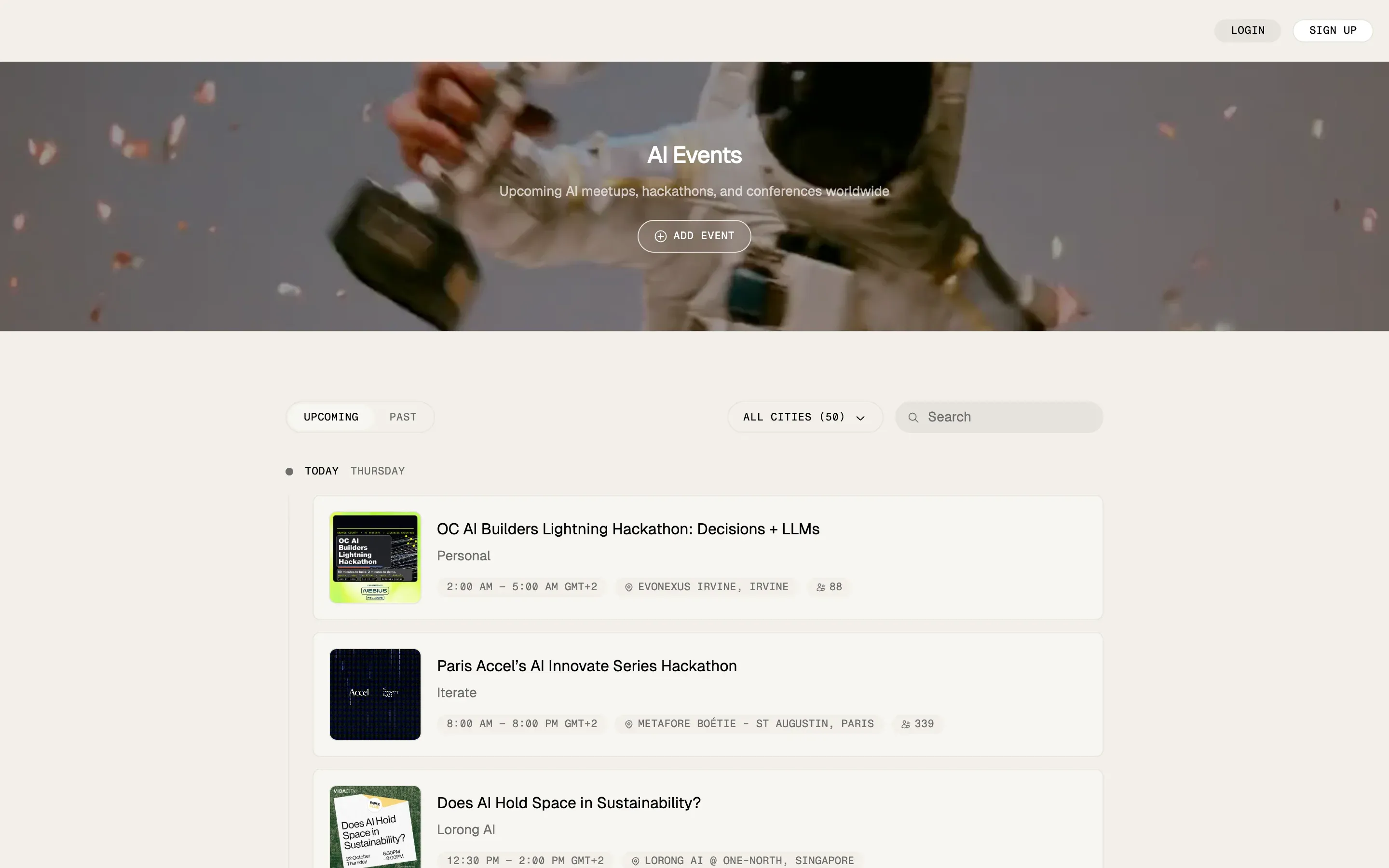
3 / 12AI events from Luma, grouped by day, in your own time zone. 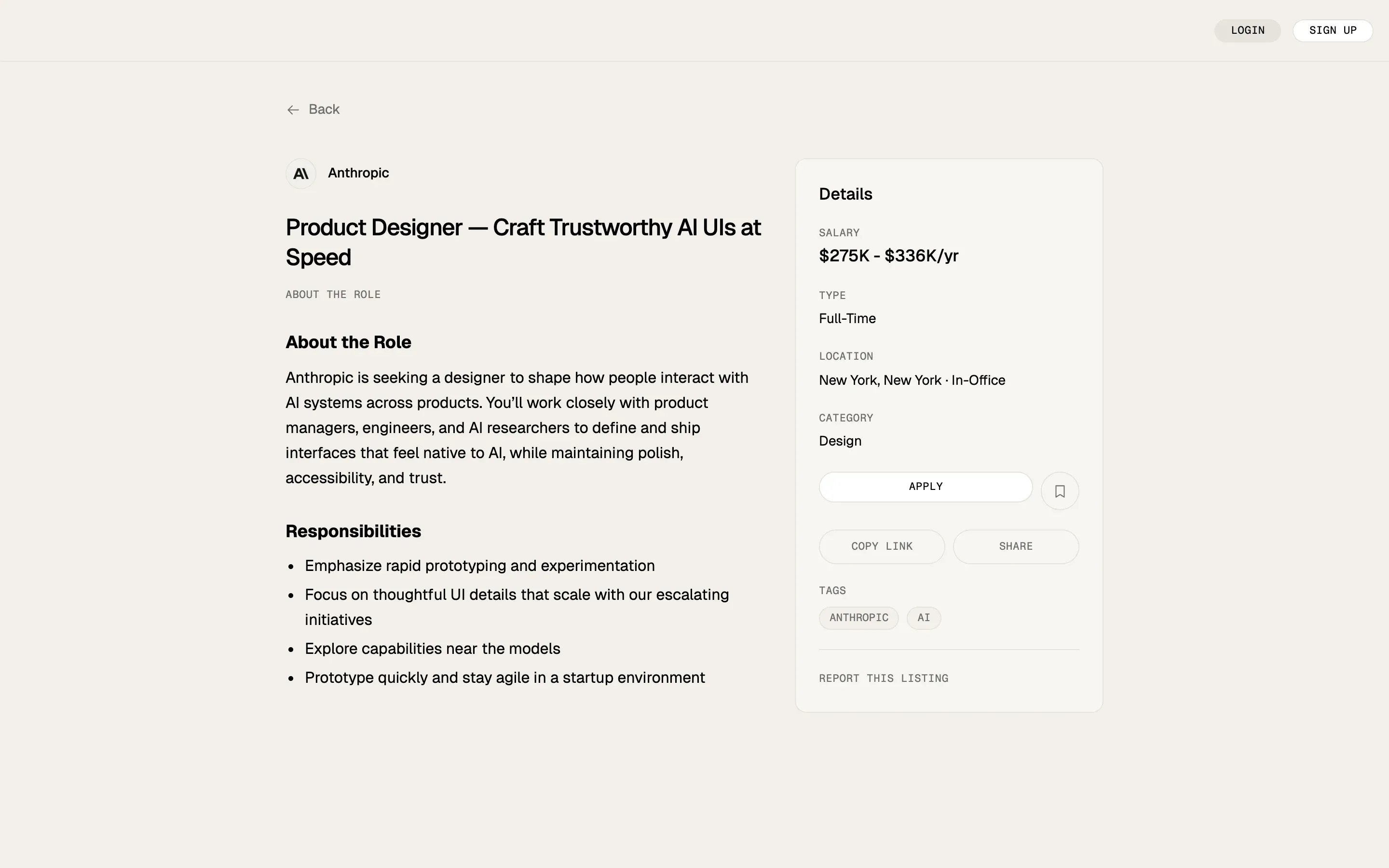
4 / 12A job, with the details that matter in one card.
Decisions and trade-offs
- Lead with free tools. The strategy was to give builders real utility first, the Starter Kit, an idea generator and the marketplace, then let the culture do the capturing, and charge only as their needs grow.
- A beta you won through a game. In the invite-only beta, a pixel shooter called MiniBlaster handed out invite codes to the people who won.
- Rankings that trust evidence until the community speaks. A listing with no votes is ranked entirely on research; as votes come in, they take over, from 5% at the first vote to 80% at a hundred. Blending a new tool with a neutral score instead would have squeezed every rank toward the middle. Evidence is weighted by source and recency, and anything that looks sponsored or affiliate is discounted. An S tier needs at least five independent sources.
- Then the model came out of the ranking. In June 2026 the AI research job was replaced by a weekly scraper of public leaderboards and Product Hunt. Claude now only curates a weekly top twenty.
- Sponsorship as placement. A sponsored listing costs $99 for 30 days and earns premium placement in a daily rotation, first come first served, with its time measured in impressions delivered. A sponsored job costs $299, with five featured slots that rotate daily.
- Sign-in that survives iOS. The iPhone’s in-app browser drops cookies on redirects, so Google sign-in on mobile skips the usual library and carries a signed token as its state, and hands back to the app with a script rather than a redirect. Sign in with Apple saves your name the first time, the only time Apple sends it.
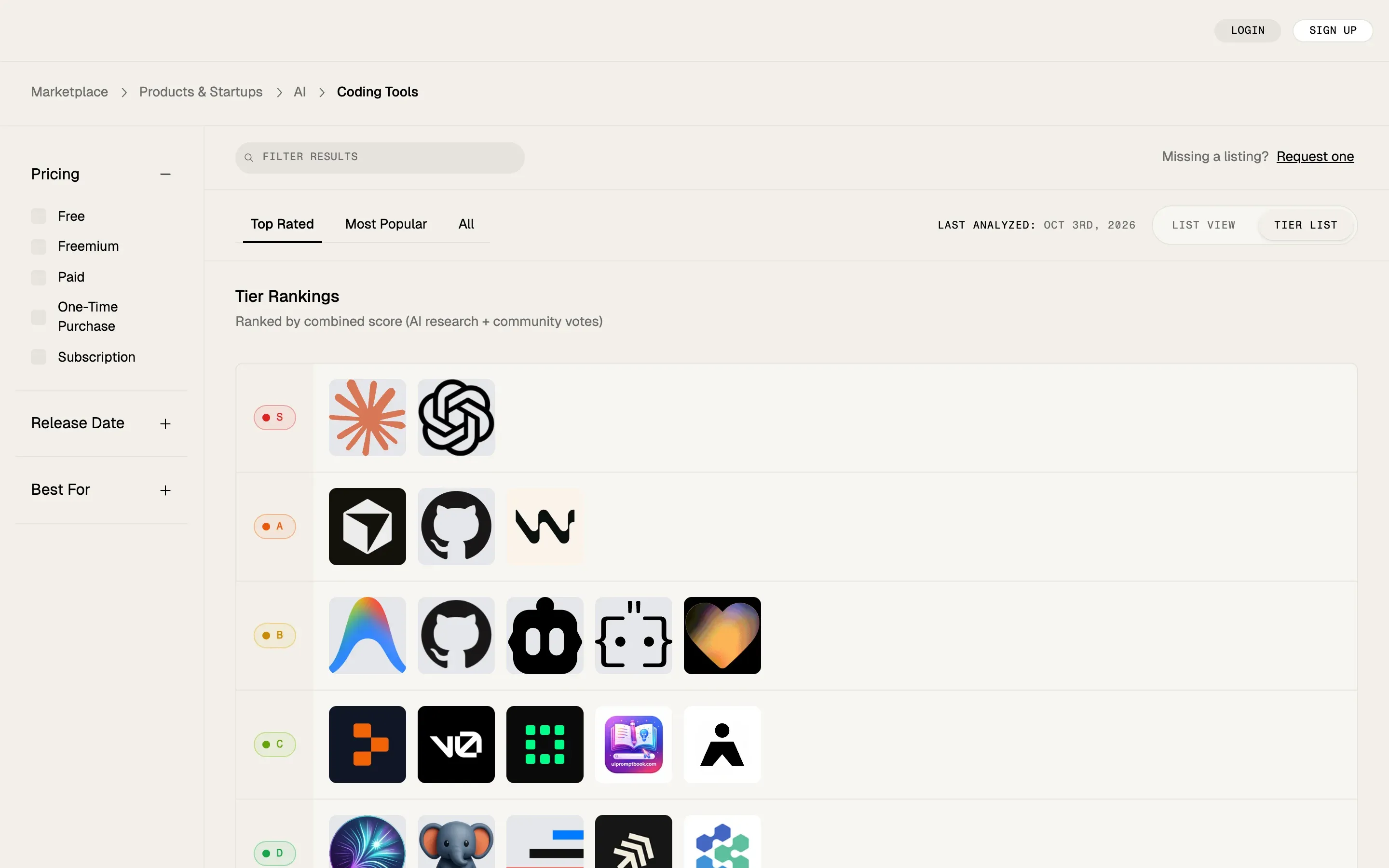
5 / 12Coding tools, ranked from S to D by research and community votes. 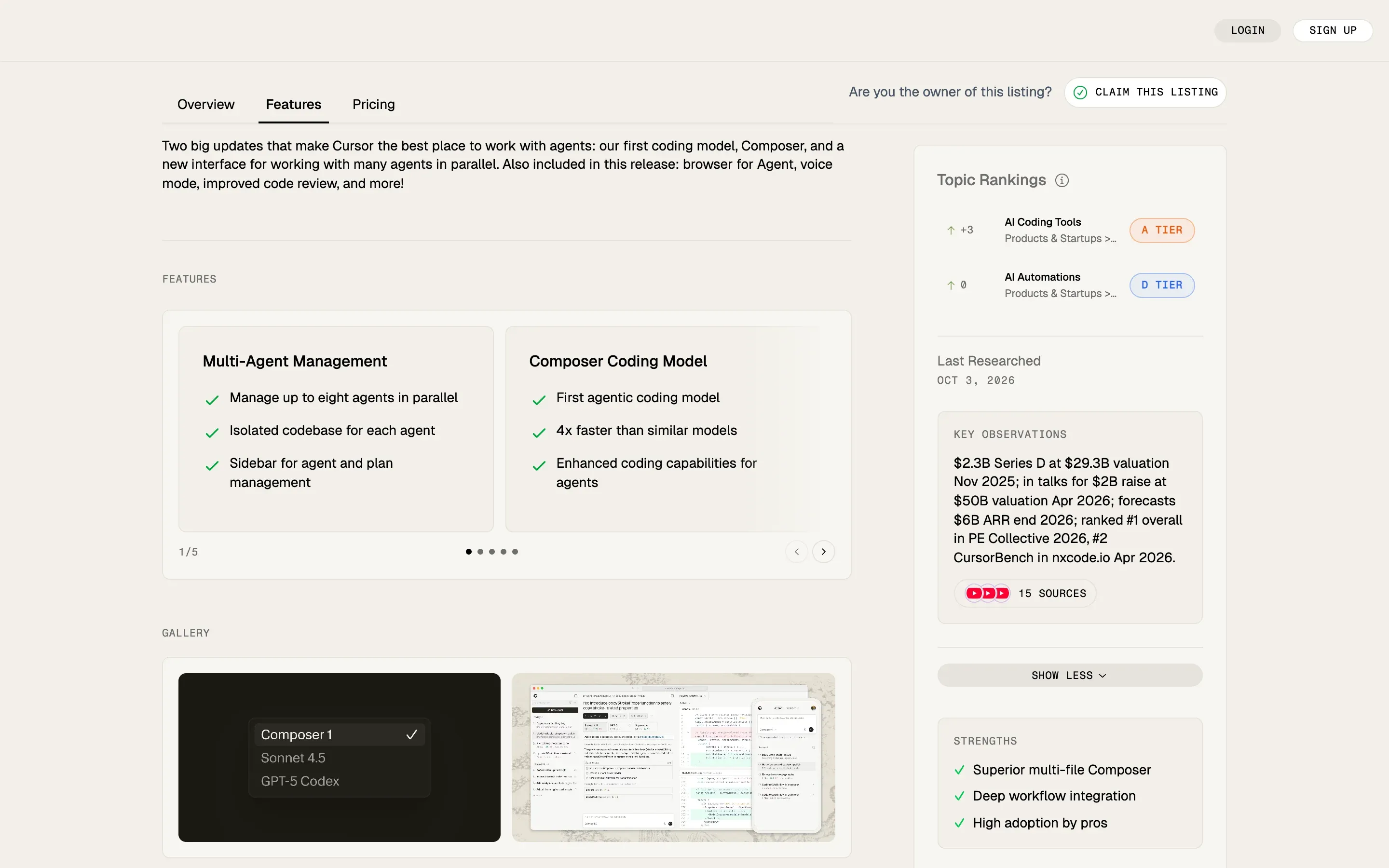
6 / 12Every rank shows its evidence: observations, sources and strengths. 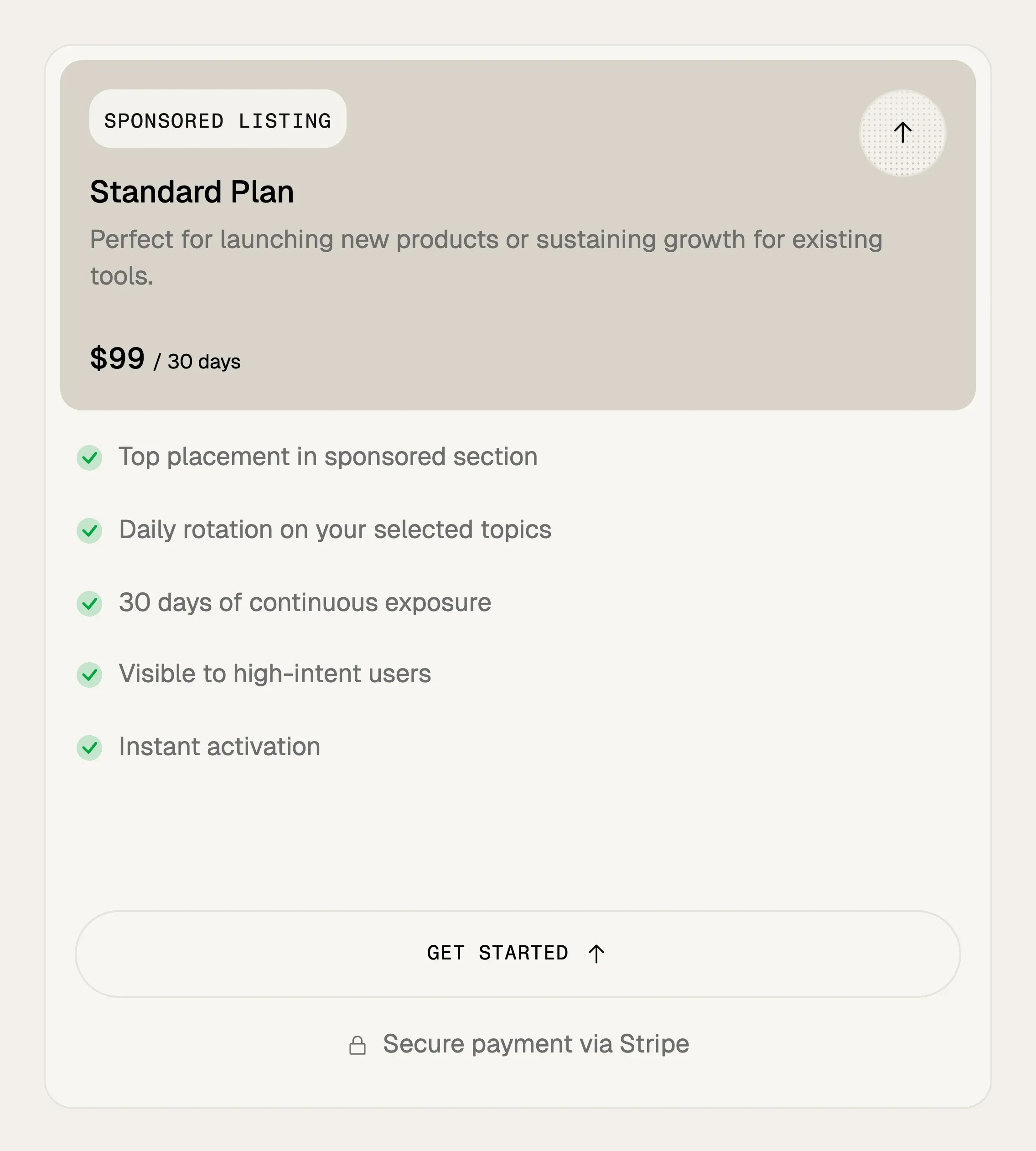
7 / 12Sponsorship buys placement in a daily rotation, not a better rank.
The Vibeathon
The Vibeathon is B150’s online hackathon for builders, designers, filmmakers, game makers, musicians and marketers, with prizes in six categories: coding, filmmaking, design, music, gaming and marketing. Season 1 had more than 600 participants from 20 countries, with Lovable, Weavy and Flodesk as sponsors. Season 2 ran from December 2025 to January 2026 with Amazon Kiro, Replit and Flodesk. Registering generates a personal “Accepted” card, ready to post.
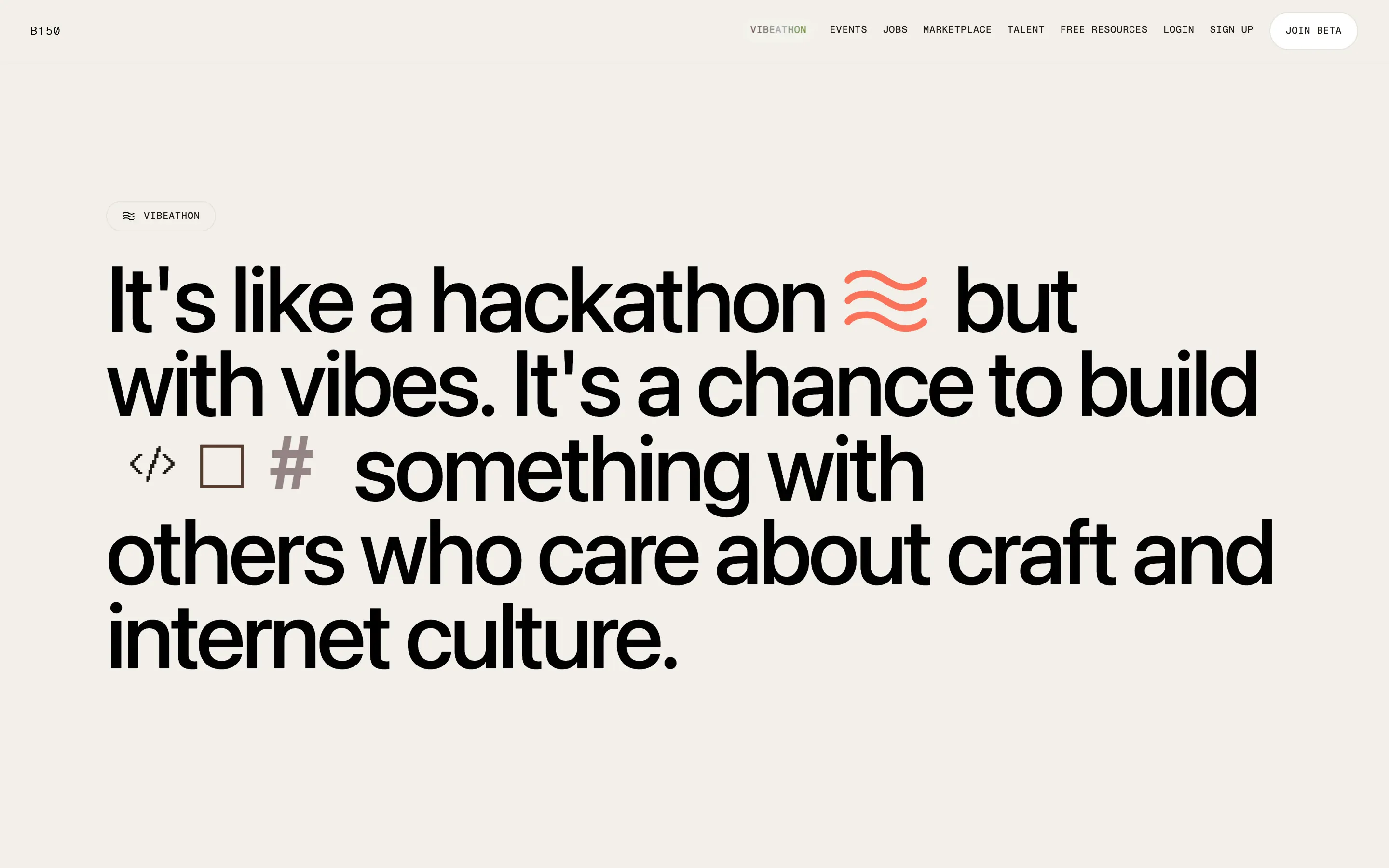
8 / 12The Vibeathon: a hackathon, but with vibes. 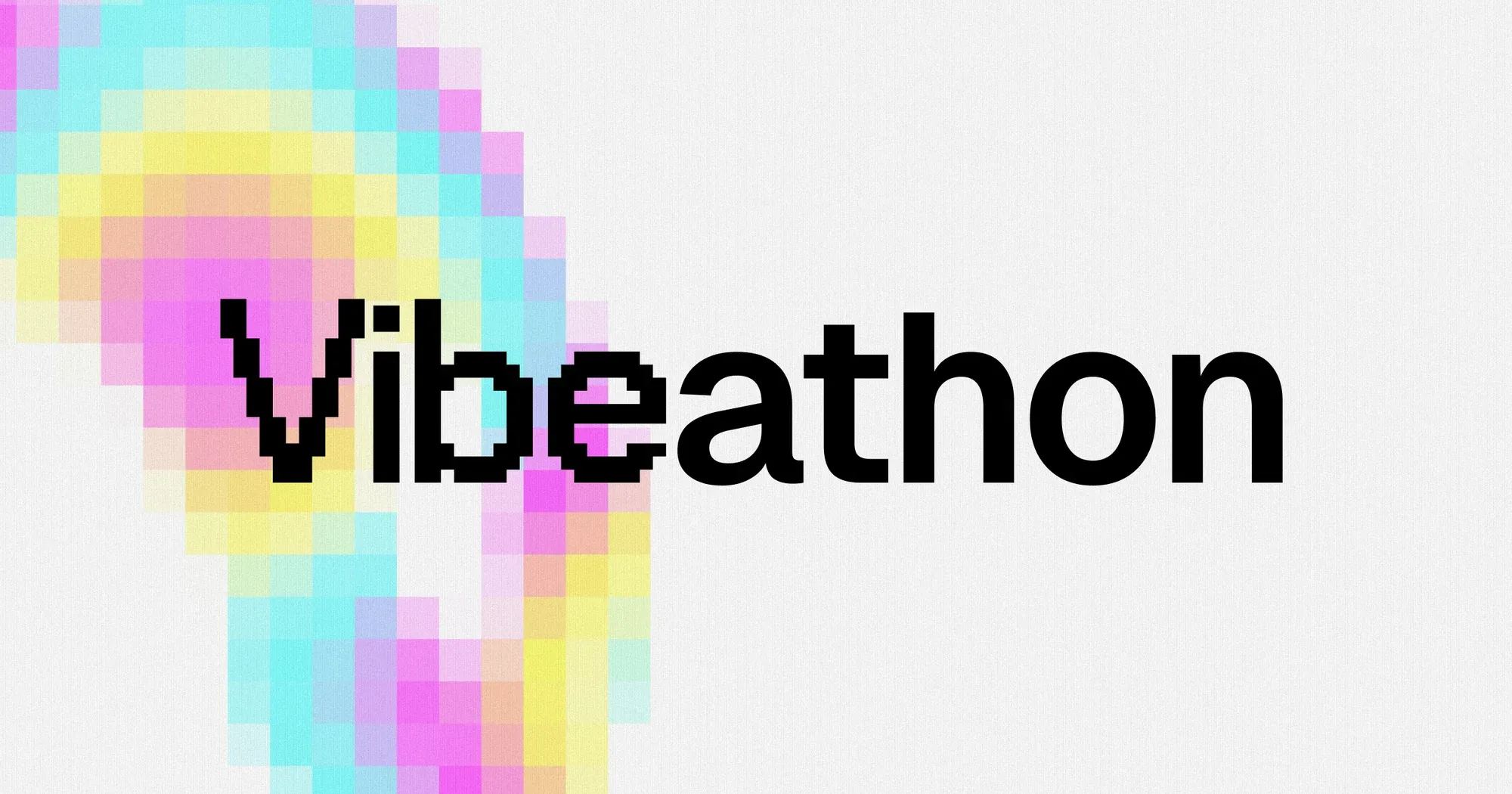
9 / 12Key art for the Vibeathon.
How it’s built
B150 is an npm workspaces monorepo. The Next.js web app and the Expo iPhone app share packages for the API client, design tokens and types, so both clients work from the same contracts. Data lives in Neon Postgres through Prisma. Sign-in covers email, Google and Apple, with passkeys and MFA on top.
Video gets its own pipeline. Uploads land in S3, an AWS Lambda hands them to MediaConvert, and the result is HLS with several renditions, so a post plays at a quality that fits the viewer’s connection. Events come from a scraper that reads Luma’s listings for 22 cities and scores each event’s relevance to AI. Jobs come from a weekly import across sixteen AI roles, plus a member board. Stripe handles sponsored listings, sponsored jobs and expert reviews.
Timeline
- 21 March 2025. First commit.
- April. Two-factor sign-in, and résumé import for profiles.
- June. The invite-only beta, with codes won in MiniBlaster.
- August. The Vibecoding Starter Kit, and the first Vibeathon.
- September. Native video upload, and sponsored marketplace listings.
- December. 3,819 tools listed in the marketplace; Vibeathon Season 2 opens.
- February 2026. AI events from Luma, and work starts on the native iPhone app.
- April. App Review rejections, answered with Sign in with Apple and guest browsing.
- June. Direct messages and groups, and the model-free ranking.
- July. Version 1.0.28 of the iPhone app.
Where it is now
B150 is live at b150.ai, with the app itself at app.b150.ai, and on the App Store for iPhone. Peer communities are listed as coming soon.
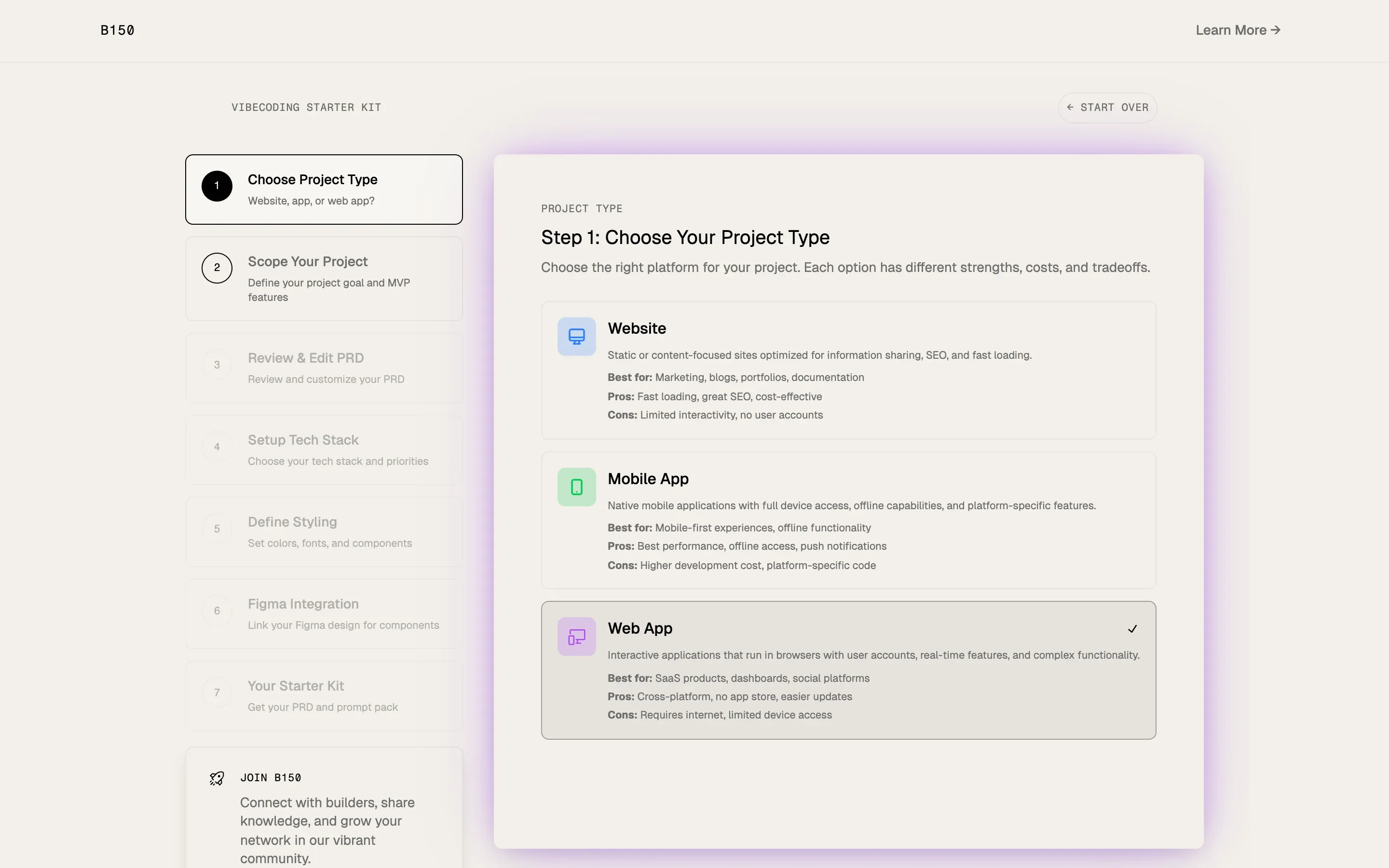
10 / 12The Vibecoding Starter Kit turns an idea into a PRD, a stack and prompts. 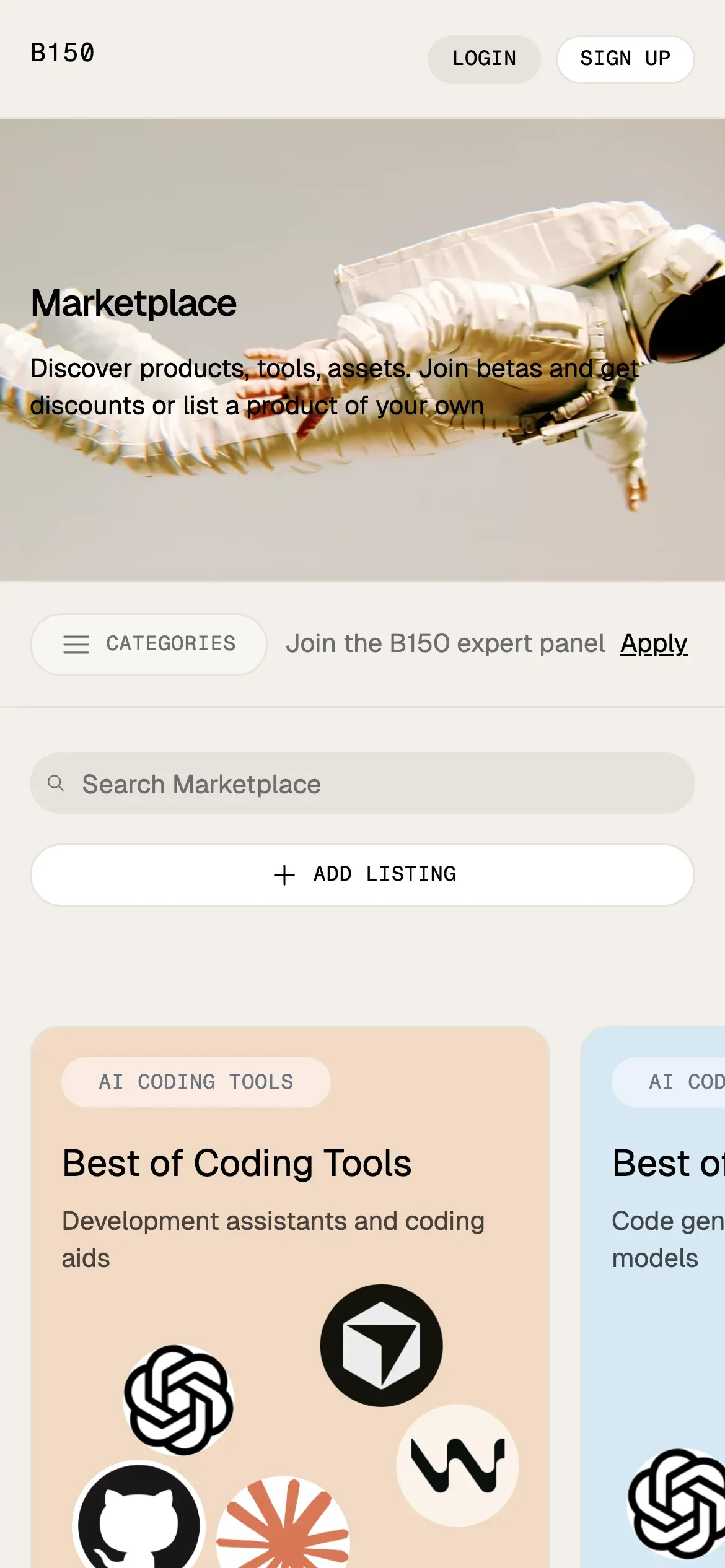
11 / 12The marketplace on a phone. 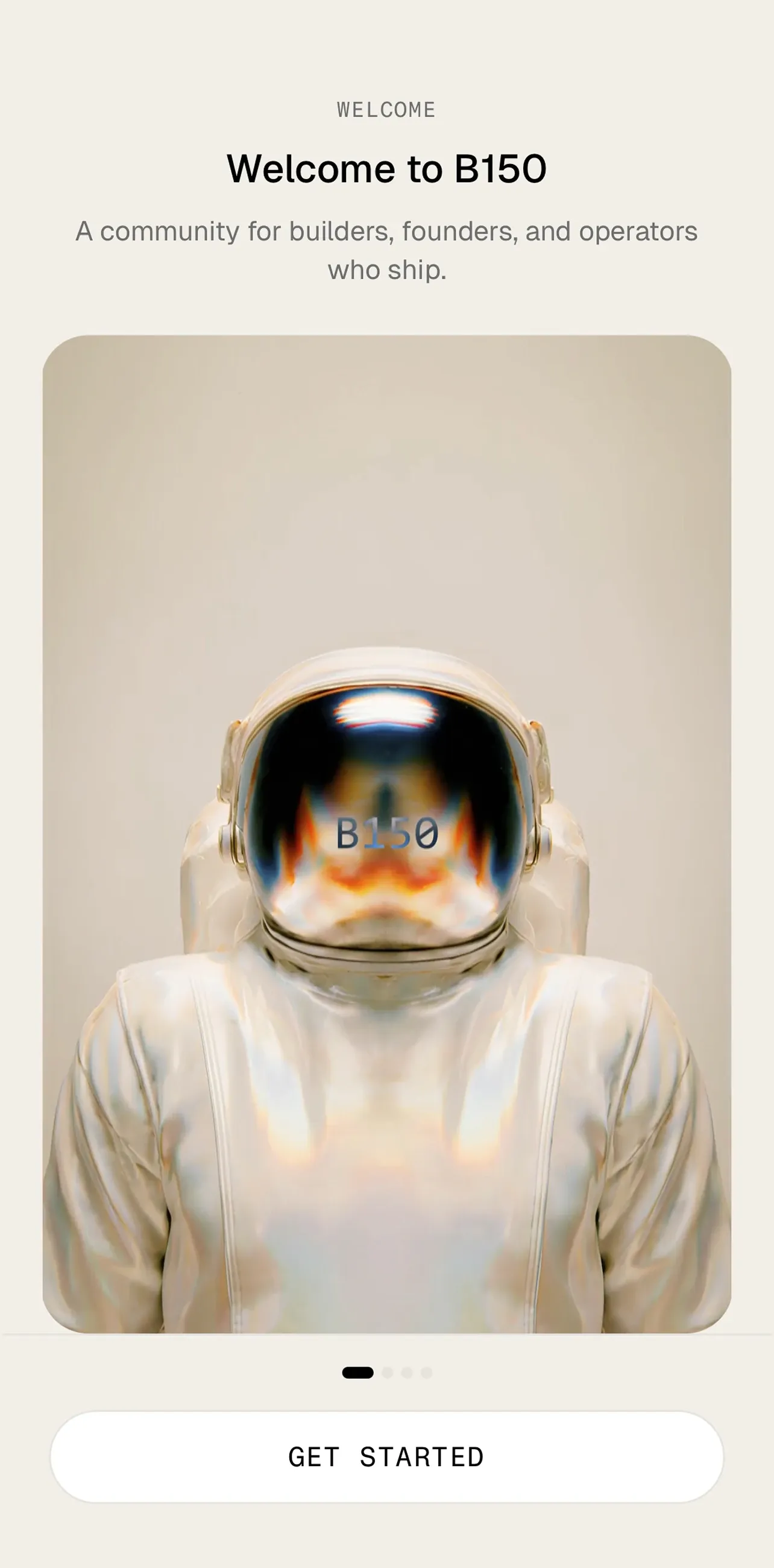
12 / 12The native iPhone app's welcome.