I've spent more than fifteen years leading design for clients like Google, Microsoft, Amazon, Meta and Verizon, as Head of Design at TIME Magazine, Head of UX at AKQA, UX Director at BASIC/DEPT® and Creative Director at AT&T AdWorks Lab. Along the way the work picked up a few awards on Awwwards, The FWA and TechCrunch.
I founded Academy, a product design agency and talent network, and I host the How We Scaled It for Design Teams podcast.
These days most of my time goes into building: apps on the App Store, open-source tools, and the AI skills I use to make them. If you have an app in mind, I can help you design it, build it and ship it.
I'm also open to conversations with investors. If you back founders who design, build and ship their own products, I'd like to hear from you. Get in touch →
- BASIC/DEPT® — Google · UX Director2021
- AKQA — Verizon · Head of UX2020
- B-Reel · Head of Design/UX
- TIME Magazine · Head of Design2017
- AT&T · Creative Director2014

I’ve led a design team of thirty-five, and a team of two. Each has its own challenges.
A team of 35
The work is the system around the work: hiring, structure, rituals, and a quality bar the team can hold without me in the room.
A team of 2
Everyone ships, me included. There’s no layer to hide behind and no handoff to wait on.
Lately, smaller teams that build with AI. How mine works now.
01
Everyone builds
I trained my whole team to vibe code: to build the thing, not only draw it.
02
Everything’s in git
Every designer commits. The work has a history, and anyone can pick it up where someone left it.
03
Code is the canvas
We design in code, so Figma is no longer the source of truth or a step anyone waits on.
04
One loop with engineering
Design and development work in the same code, together, instead of passing files across a wall.
05
Days, not months
An idea goes from first sketch to production in days instead of months.
“Adam is a very thoughtful manager and an empathetic human being. He's excellent at his craft and has a real passion for design and user experience. What I admire about him most is his management skills, especially as it relates to his emotional intelligence.”
I start with the system, build in code and keep the AI honest. The techniques, the rules, the ethics and the tools.
The techniques. What happens before anything gets generated.
01
The design system comes first
Type, colour, spacing and components, written down before any screens. Then I turn the system into a skill, so everything the AI makes starts on brand.
02
Libraries for the solved parts
Dialogs, menus and toasts come from shadcn/ui and Radix, so the time goes into the parts that make the product its own.
03
A skill for anything I explain twice
When I’d be telling an AI the same thing again, I write it down as a skill. The ones worth sharing are open source.
04
Constraints, not guesses
I hand the model the grid, the type scale and every state up front, instead of letting it guess and fixing it after.
05
Judge it running
Ideas get built in code from day one, so decisions are made on the real thing, not a picture of it.
AI earns trust when it asks first, shows its reasons and knows where it stops. Six rules my own apps keep.
01
It asks before it acts
Zine’s agent drafts the fixes and Source’s drafts the nudge, but nothing publishes or sends until you approve it. In Transistor every tool call is classified, and a tool it doesn’t know counts as risky.
02
You choose where it runs
Walkie can transcribe on your own computer, with Wi-Fi off and no account, or in the cloud, faster, and then discard the clip. Transistor keeps its memory and your credentials on your Mac.
03
Read only, unless you say otherwise
An assistant connected to Walkie or Gaia can read and summarise, never change anything. Gaia’s connection is approved on its own site, not inside the assistant.
04
Honest about what it doesn’t know
Gaia predicts the next nap as a range, not a promise, and its recipes stay labelled as drafts until a registered dietitian has reviewed them.
05
It shows its reasons
Zine ranks each finding next to the searches you’re losing and records who AI answers cite, so every change it suggests comes with the why.
06
The line comes first
I decide what the AI must never do before I build it. Gaia’s assistant can’t change the log, diagnose a child or turn a pattern into medical advice.
The ethics. The lines I hold, in every app.
01
Your data stays yours
Walkie can run with Wi-Fi off, Transistor keeps its memory on your Mac, and Gaia’s assistant sees one family’s records and nothing else.
02
No pretending
Drafts are labelled as drafts, and a guess is shown as a guess. Gaia never dresses a pattern up as medical advice.
03
Credit the people it’s built on
Open Tributary is my open white paper on paying open-source creators when the products built on their work earn.
Read it →04
Open by default
Source, my skills and Walkie’s meeting connector are open source, so anyone can read exactly what they do.
The toolkit. My favourites, and the skills I wrote.
Building
- Claude Code
- Codex
- Paper
- Cloudflare
- Supabase
- Expo
- Tauri
- Astro
- Next.js
UI libraries
- Tailwind CSS
- shadcn/ui
- Radix UI
- Lucide
- GSAP
- Motion
- Lenis
- Three.js
- React Three Fiber
- Paper Shaders
- Tiptap
- Sonner
- Zustand
- Reanimated
Skills I wrote
Skills I lean on
- Anthropic’s frontend-design
- Emil Kowalski’s design engineering
- Make Interfaces Feel Better
- 12 Principles of Animation
- GSAP’s official skills
- Impeccable
- Vercel’s Web Interface Guidelines
- Remotion best practices
Talks at Web Summit, Fifteen Seconds and Tech Open Air. On design leadership, careers and AI.
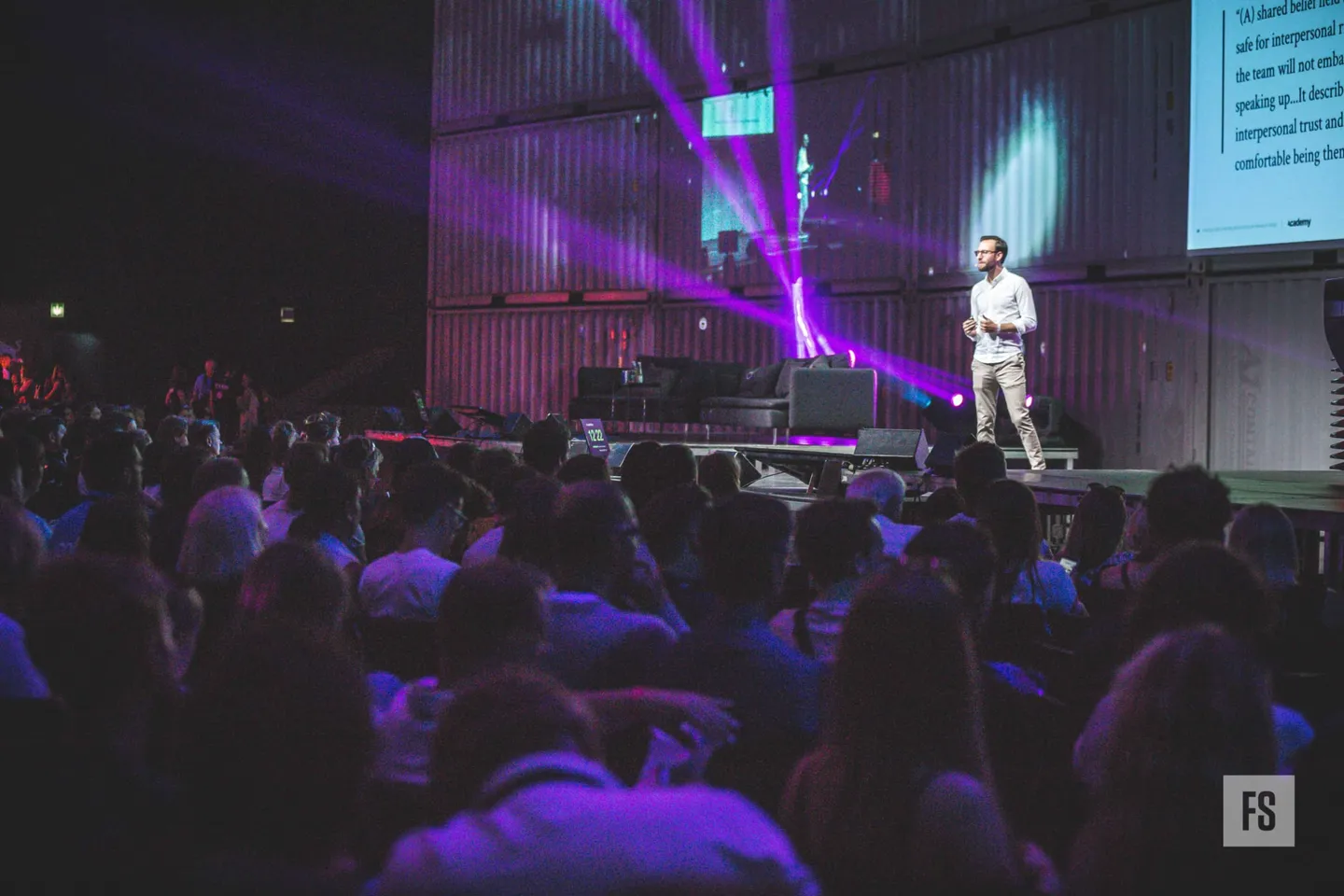
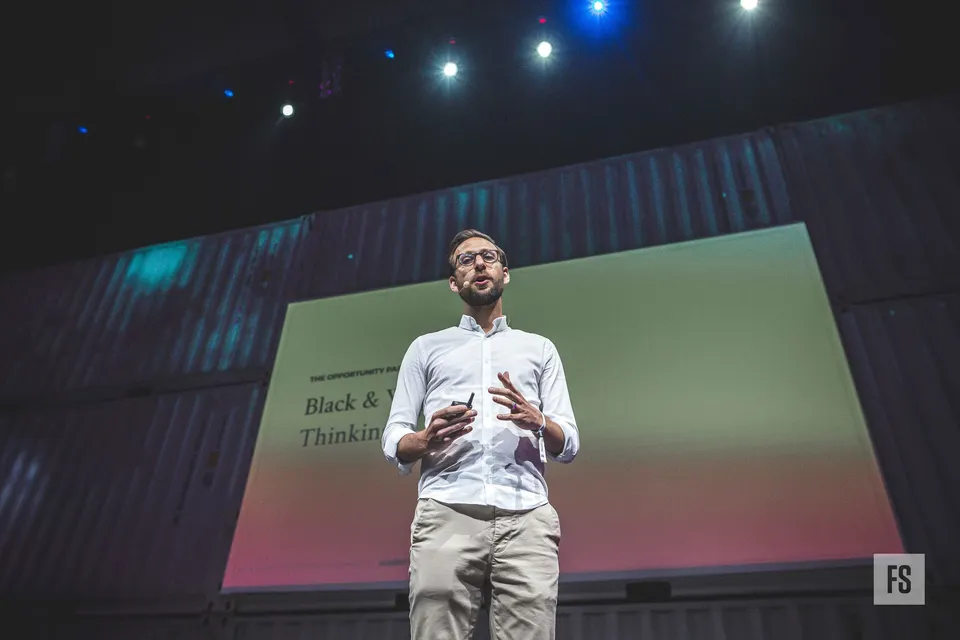








- 2023Impact of AI on the Design Industry · Fifteen Seconds26:07 ↗
- 2022Why Is It So Dang Hard to Get a Job? (panel) · ADPList Be More Festival42:12 ↗
- 2019How Ego Influences Decision Making · Fifteen Seconds27:40 ↗
- 2017Speaking for TIME Magazine · Fifteen Seconds24:13 ↗
- 2016Is UX an Opiate for the Masses? · Web Summit23:31 ↗
- 2016UX ≠ UI · Web Summit16:51 ↗
- 2016A Design Sprint to the Finish · Tech Open Air, Berlin13:27 ↗
Podcasts, workshops and interviews. On design careers, hiring and building Academy.
- PodcastHow to Get the Design Job You Want · Brave UX↗
- PodcastWhy Continuous Improvement Matters in Careers · Fifteen Seconds↗
- PodcastUX Recruitment Strategies: Top Tips for Designers · Product Design Podcast↗
- WorkshopTransform the sprint process with DesignBetter.Co · InVision Inside Design↗
- ArticleTime waits for no-one, stay curious, be intrepid and make your own luck · TOA.life↗
- PodcastAdam Perlis, CEO and Founder of Academy · Agency of Today↗
- PodcastAdam Perlis, CEO of Academy · Dallas Design Sprints↗
- PodcastService & Experience Design · Alia Stories↗
- PodcastDesign Think Your Life and Business · The Focus Bee Podcast↗
Let's build your app.
Consulting, design or a full build. Tell me what you're making and where you're stuck.